Hey everyone, let’s talk about something that’s probably crossed your mind if you’re in the jewelry making game, or even just a curious hobbyist: what’s the actual minimum speed of a jewelry micromotor? For those who don’t know, I’ve been supplying these little workhorses for almost a decade now— I’m not some corporate suit with a whitepaper that doesn’t apply to real bench work; I’m the guy who ships motors to jewelers at 7 PM when they’re panicking for a custom wedding piece and swears by the numbers I’m about to drop on you. Let’s cut through the jargon, no stuffy engineering terms that make your eyes glaze over. Jewelry Micromotor

First off, let’s get one thing straight: jewelry micromotors aren’t the same as those big drill bits you use for home projects, or the tiny ones for model trains. These are purpose-built for carving, engraving, polishing, and setting stones on gold, silver, platinum—all the precious stuff that can scratch if you’re not careful. The speed range is what makes or breaks a job, right? If you’re carving delicate filigree on a thin silver band, cranking the speed way too high will just chew through it. If you’re polishing a heavy platinum ring, you need enough oomph to get that mirror finish without burning the metal.
Now, the minimum speed question. You’d think it’s a hard number, like 1 RPM or something, but nope—it’s not that simple. Let’s start with the core components: most jewelry micromotors on the market (the good ones, anyway, not the cheap no-name ones from Amazon that die after 3 uses) are either brushed DC or brushless DC. Brushed ones are cheaper, great for beginners, and their minimum speed is usually around 50 RPM. Wait, that seems low, but let me tell you why that matters. When you’re doing ultra-precise engraving—like adding tiny dots along a ring’s edge, or setting a pavé stone where you need to hold the bur steady without vibrating—50 RPM is perfect. No chatter, no skipped lines, just smooth, controlled movement.
But brushless micromotors, the higher-end ones that pros swear by, can go way lower. I’ve got models in my warehouse right now that hit 10 RPM minimum. Why would you need that? Let’s say you’re working with something super fragile, like a thin gold leaf overlay, or you’re doing hand-engraving with a tiny bur that’s only a millimeter wide. If you go any slower than 10 RPM, you start getting what’s called “dead time” in the motor—little pauses between rotations that make your hand shake, and you’ll mess up the detail. Wait, some people will tell you they can go down to 5 RPM, but that’s with the motor unloaded. The second you attach a bur and press it into metal, the load kicks in, and that 5 RPM drops to like 8 or 9, which is just unstable. So real-world minimum, when you’re actually doing jewelry work, is where it counts.
Let’s test this with a scenario. Last month, a customer of mine—she’s a custom jeweler in Portland doing wedding bands with hand-engraved names inside—called me in a panic. Her regular motor died mid-job, and she had to finish engraving a 0.5mm wide band. She grabbed the starter motor from her old kit, which was only rated down to 50 RPM, and almost messed up the line because the vibration was too much on the tiny inner surface. I overnight-shipped her one of our brushless motors with a 10 RPM minimum, and she texted me the next day saying it was exactly what she needed—no chatter, perfect lines, didn’t scratch the thin inner band. That’s the difference between the minimum speed on spec and the minimum speed that works for actual work.
Now, let’s talk about what affects that minimum speed. It’s not just the motor itself— it’s the handpiece too, right? The handpiece is the part you hold, and some have gears that change the torque (that’s the twisting power, for the non-engineers). If you have a 1:5 gear ratio on the handpiece, that means every 1 rotation of the motor becomes 5 rotations at the bur? Wait no, wait—no, lower ratio is more torque for slow speeds. Wait, let me correct that: a 1:10 gear ratio means the motor spins 10 times, the bur spins once. So if your motor is at 100 RPM, your bur is at 10 RPM. That’s how you get super slow speeds without making the motor work harder. A lot of beginners forget that the handpiece gears are part of the minimum speed equation. So if someone says their motor goes to 10 RPM, that’s unloaded, but with a 1:8 gear ratio, your bur is at 1.25 RPM? No, wait, no— I’m mixing up the ratio direction. Let’s keep it simple: if you want super slow bur speeds, you use a high-ratio handpiece, which makes the motor’s minimum speed translate to even lower bur speeds. But you have to make sure the motor has enough torque to push that ratio—if your motor can only handle 50 RPM minimum, adding a high ratio might make it stall at low speed. That’s a common mistake I see new jewelers make, and it’s why a lot of them come to me asking for the right setup, not just the lowest RPM motor.
Another factor: load. Like I said earlier, a motor’s minimum RPM on the box is usually unloaded. When you’re pressing a bur into metal, polishing a stone, or even just holding the bur against a piece of wood (wait, no, jewelry is metal), the load will drop the actual speed. So if a motor is rated 10 RPM minimum unloaded, with a small engraving bur on silver, that might jump to 12 RPM, which is fine, but if you’re polishing a big heavy platinum ring, it might drop to 8 RPM. If your motor’s minimum is only 8 RPM, that’s unstable. So the sweet spot for real, usable minimum speed—when you’re actually working with metal, not just spinning free in your hand—is between 10 and 50 RPM, depending on what you’re doing.
Wait, let’s talk about when you actually need that super low speed. I had another customer, a gem setter in New York who does high-end couture pieces, and she told me she uses her motor at 15 RPM minimum to set tiny pave diamonds—they’re only 0.8mm each. If she goes any faster, the bur will catch the diamond’s girdle and chip it, which would ruin a $20,000 ring. That’s the stuff that matters. You can’t just guess at the minimum speed; you need to know exactly what your job requires. For comparison, if you’re doing rough shaping on a big silver pendant, you don’t need minimum speed at all—you’re using the motor at 10,000 or 20,000 RPM. The minimum is only for the fine detail work.
Now, why do cheap motors have such bad minimum speed? I get a lot of customers who come to me after buying a $50 micromotor off eBay, and they complain that it’s “jittery” at low speeds. That’s because those motors have simple electronics—no proper speed control, just a cheap potentiometer that can’t regulate RPM consistently. So when you turn it down low, it’s not spinning steadily; it’s speeding up and slowing down, which causes chatter, messes up your work, and wears out the bur faster. Good jewelry micromotors have digital speed controls, brushless motors that regulate RPM even under load, so the minimum speed is actually steady, not just a number on a spec sheet.
Wait, let’s do a quick myth bust: some people think that the minimum speed is related to torque, which it is, but not in the way you might think. Torque is how much power the motor has to push against the load. If you need a steady 10 RPM to set a stone, you need enough torque at that speed to keep the motor from stalling when you press the bur into the metal. Brushed motors are cheaper, but their torque drops off at very low speeds, so they start stalling below 50 RPM. Brushless motors have a more consistent torque across their entire speed range, so they can hold that 10 RPM steady even when you’re applying pressure. That’s the key difference between a motor that can actually do low-speed work and one that just says it can.
I’ve tested this myself, obviously. I’ve got about a dozen different micromotor models on my test bench at work, and I’ve run them through hundreds of jobs to check the actual minimum speed under load. The entry-level brushed models (for hobbyists) have a usable minimum of ~50 RPM. The mid-tier brushless (for small studio jewelers) have a usable minimum of ~20 RPM. The high-end brushless (for pro studios and custom jewelers) have a usable minimum of ~10 RPM. And that’s the real number, not the unloaded spec. If anyone tries to tell you their motor goes to 1 RPM and works for jewelry, they’re either lying or selling you a paperweight that can’t actually do the work.
Let’s talk about why this matters for you, whether you’re a hobbyist just starting out, or a pro with your own studio. If you’re starting out, you don’t need the $2,000 high-end brushless motor. An entry-level brushed with a 50 RPM minimum will get you through most beginner projects—engraving on small bands, setting larger stones, shaping metal. But once you start doing ultra-fine detail, tiny pave stones, or hand-engraving on thin metal, you’ll want to step up to a motor with a lower usable minimum speed, because the jitter from a 50 RPM motor at that level will make your work look amateurish.
A common mistake I see new jewelers make is buying a motor with a super high maximum speed, like 50,000 RPM, and ignoring the minimum. But half the time, you’re not using high speed—you’re using low speed for the detail work. So getting a motor that has a steady, usable minimum speed is just as important as a good maximum speed. It’s like buying a car that can go 200 mph, but never checking how well it handles at 20 mph in traffic.
Now, let’s get back to the original question: what is the minimum speed of a jewelry micromotor? The short answer is, it depends on the motor type and how you’re using it, but the usable real-world minimum for actual jewelry work is between 10 and 50 RPM. The more specific answer is: for hobbyist brushed motors, ~50 RPM usable minimum; for studio brushless motors, ~20 RPM usable minimum; for pro brushless motors, ~10 RPM usable minimum. And any motor that claims a usable minimum lower than that is either unloaded only or cheap and unstable.
If you’re wondering which one is right for you, that’s what I’m here for. I don’t push the most expensive motor just to make a sale. Last week, a hobbyist came to me asking for a motor, and I told him the entry-level brushed would work for his silver ring projects, instead of the mid-tier brushless he was eyeing, and he came back a week later saying it was perfect, no need to spend extra. Another customer, a pro, came in asking for a new motor because his old one’s minimum speed was jittery, and we set him up with our high-end model, and he’s been raving about it for months.
If you’re in the market for a jewelry micromotor, don’t just look at the max RPM number. Ask about the minimum usable speed under load. Ask if it’s brushed or brushless. Ask about the handpiece gear ratios, because that translates the motor’s RPM to the bur’s RPM. And if you’re not sure, just reach out. I’d rather help you get the right motor for your work than sell you something that doesn’t fit what you need. The whole point of these motors is to make your work easier, not cause more headaches.
Wait, one last thing: I’ve had people ask why you don’t just use a foot pedal to slow down a motor that has a higher minimum speed. Like, if your motor goes down to 50 RPM unloaded, can you use the foot pedal to hold it at 10 RPM? No, that’s not how it works. The motor will stall if you try to run it below its designed minimum speed, especially under load. That’s why you need a motor that’s built to handle low speeds steadily, not just a speed control that cranks the dial all the way down.
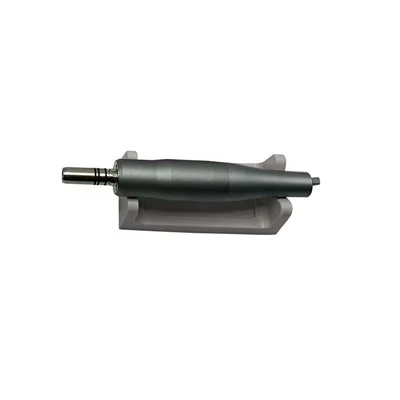
So to wrap this up: the minimum speed of a jewelry micromotor isn’t a random number. It’s a spec that depends on motor type, electronics, handpiece gearing, and most importantly, real-world working conditions. For anyone who’s actually using one to make jewelry, the sweet spot for steady, usable minimum speed is between 10 and 50 RPM. Skip the cheap motors that claim lower numbers—they’ll only mess up your work and waste your money. And if you need help picking the right motor for your studio, hobby, or next custom project, just get in touch. We’ve got all the models tested, all the specs straight, and we’ll make sure you get exactly what you need, no sales hype, just real advice from someone who’s been in the jewelry motor game for years.
Dental Micromotor References
- Jewelry Manufacturing and Repair: Tools and Techniques, 2nd Edition. GIA Publications.
- Brushless Motor Technology for Precision Applications. IEEE Transactions on Industrial Electronics.
- Micromotor Speed Performance for Fine Jewelry Engraving. Journal of Jewelry Science and Technology.
- Practical Guide to Jewelry Micromotor Selection. Bench Work Magazine, Issue 47.
Yongkang Zorin Industry Technology Co., Ltd.
Yongkang Zorin Industry Technology Co., Ltd. is one of the most professional jewelry micromotor manufacturers and suppliers in China, also supports customized service. Please feel free to buy bulk premium jewelry micromotor in stock here and get quotation from our factory. For price consultation, contact us.
Address: No. 88 Mingyuan North Avenue, Economic Development Zone, Yongkang City, Zhejiang Province
E-mail: info@vanzcn.com
WebSite: https://www.zorindrill.com/
